Implantology · Le Chesnay (78150)

Dental implant in Le ChesnayRegaining a fixed, aesthetic, and comfortable tooth

The loss of a tooth can have significant consequences on chewing, the aesthetics of the smile, and self-confidence.

Today, dental implants are the gold standard solution for replacing a missing tooth without relying on neighbouring teeth.

At Dr Gary Murciano's practice in Le Chesnay, each implant treatment is planned using the most modern digital technologies to achieve a natural, comfortable, and perfectly integrated result within the smile.

Thanks to the 3D CBCT scanner, the 3Shape optical camera, and a personalised approach, we can replace one or more missing teeth while maximising the preservation of existing tooth structures.

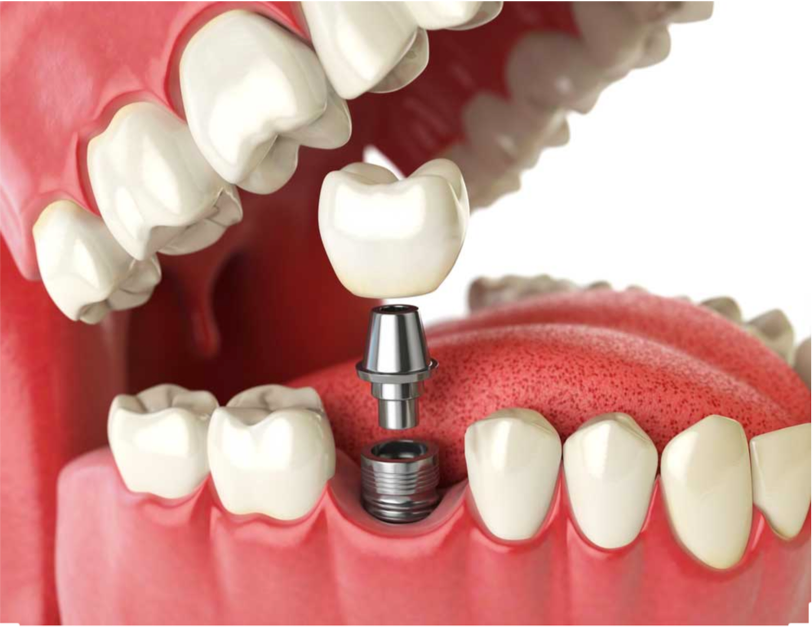
Single tooth dental implant — 3D illustration
Single implant · Anatomy
Conservative approach
Maximum preservation of dental tissue
Modern equipment
3Shape intra-oral scanner, digital panoramic X-ray, CBCT scanner, dental loupes
Bespoke aesthetics
Fine ceramics, natural and lasting results
Reference practice
Patients throughout the Yvelines

Section 1

Why replace a missing tooth?

When a tooth is lost, the consequences are not merely aesthetic. Gradually, the absence of a tooth can lead to:

  • a shifting of adjacent teeth
  • a reduction in chewing efficiency
  • progressive bone loss
  • difficulty eating certain foods
  • a change in the overall balance of the mouth

Many patients believe they can live without replacing a missing molar. However, preserving the balance of your dentition often helps to prevent future complications.

Section 2

What is a dental implant?
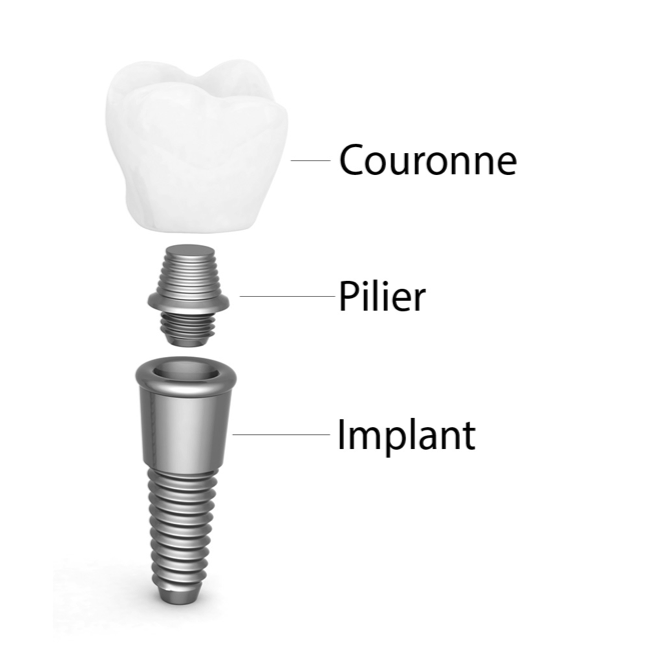
Diagram of a dental implant integrated into the bone
Implant integrated into the bone

A dental implant is an artificial root placed into the bone to replace the root of a missing tooth.

Once integrated into the bone, it serves as a support for a custom-made crown.

The aim is to restore:

  • a fixed tooth
  • comfortable chewing
  • a harmonious smile
  • a sensation close to a natural tooth
Diagram · Anatomy of an implant
1
Implant

Titanium artificial root integrated into the bone

2
Abutment

Connector between the implant and the crown

3
Crown

Custom-made ceramic restoration

Section 3

Replace a single tooth without affecting neighbouring teeth

One of the main advantages of a dental implant is that it allows for the replacement of a missing tooth without having to rely on adjacent teeth.

This approach allows for the preservation of more natural dental tissue and aligns perfectly with the practice's conservative philosophy.
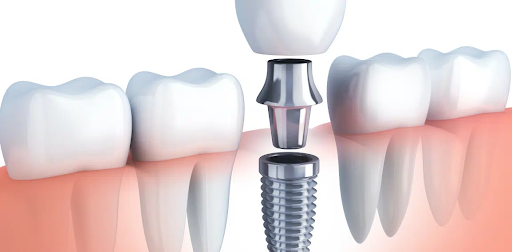
Single dental implant with ceramic crown
Single implant + crown

An implant may be indicated to replace:

  • a missing molar
  • a missing premolar
  • a missing incisor
  • a missing canine

Section 4

Replacing several teeth

When several teeth are missing, different solutions can be considered. Implants can support:

  • several individual crowns on implants
  • an implant-supported bridge
  • a more extensive restoration
Implant-supported bridge — replacement of several teeth
Implant-supported bridge

Each project is studied individually to determine the most appropriate solution based on the patient's anatomy, bone volume, and expectations.

Section 5

Dental implant or bridge?

Both options allow for the replacement of a missing tooth. The choice depends on the clinical situation, available bone volume, the health of adjacent teeth, and the patient's expectations.

Comparison table
Dental implant · Bridge
CriterionDental implantBridge
Preservation of adjacent teethNo intervention necessaryPreparation of adjacent teeth
Daily comfortSensation akin to a natural toothGenerally good comfort
AestheticsExcellent (ceramic crown)Excellent (ceramic)
StabilityDirect bone anchorageSupport from adjacent teeth
MaintenanceBrushing + interdental brushes / flossSpecific hygiene under the bridge
Bone preservationStimulates the bone like a tooth rootNo bone stimulation in the area of the missing tooth
As each clinical situation is unique, the choice between an implant and a bridge is determined after a personalised assessment at the clinic.

Implants and bridges are not mutually exclusive: they are two complementary solutions. At Dr Gary Murciano's practice in Le Chesnay, the indication is determined after a comprehensive clinical and radiological assessment.

Section 6

Digitally guided implantology

The practice is equipped with a 3D CBCT scanner and an 3Shape optical scanner allowing for precise planning of each implant treatment.

3D CBCT Scanner

Three-dimensional anatomical visualisation

3Shape Scanner

Digital impression without paste

Digital planning

Guided and precise implant placement

The advantages:

  • better anatomical visualisation
  • personalised treatment planning
  • improved patient comfort
  • precision of restorations
  • better communication with the laboratory

Section 7

Why choose Dr Gary Murciano?

Implantology is not just about replacing a tooth. It requires a holistic analysis of the mouth, bone, occlusion, smile, and the patient's expectations.

Each treatment is carried out using a personalised approach aimed at achieving a natural, functional, and aesthetic result.

Frequently Asked Questions — Dental Implant

The placement of a dental implant is performed under local anaesthesia and is generally very minimally uncomfortable. Modern digitally-guided implantology techniques allow for precise, minimally invasive surgery that is well-tolerated by the majority of patients.

Yes. A molar is one of the teeth most frequently replaced by a dental implant at the practice. Restoring a missing molar helps preserve chewing efficiency and prevents the shifting of adjacent teeth.

Yes. Replacing an incisor requires particular aesthetic attention: smile analysis, shade selection, and integration of the crown with the gum and adjacent teeth. Digital planning facilitates obtaining a natural result.

After an extraction, several options can be considered: a dental implant, a bridge, or sometimes a removable denture. Dr Murciano conducts a full assessment (clinical, radiological, 3D CBCT scan if necessary) to propose the most suitable solution for your situation.

A dental implant replaces a missing tooth without affecting adjacent teeth. A bridge, on the other hand, relies on adjacent teeth for support. Each solution has its indications: the decision depends on bone condition, the health of neighbouring teeth, and the patient's expectations.

Yes. Multiple implants can support individual crowns or an implant-supported bridge. Each project is studied individually to determine the most suitable configuration.

Dental implants are suitable for most adult patients in good oral health and with sufficient bone volume. A clinical and radiological assessment at the practice will confirm the indication.

Treatment begins with a comprehensive assessment and a CBCT 3D scan. Implant placement is then digitally planned and carried out under local anaesthesia. Once the implant has integrated with the bone, a custom-made crown is designed based on a 3Shape digital impression.

The absence of a tooth, even a posterior one, can lead to displacement of neighbouring teeth, progressive bone loss and reduced chewing efficiency. Restoring the balance of the dentition often helps prevent future complications.

An implant should be maintained like a natural tooth: gentle brushing twice a day, use of interdental brushes or floss, and regular check-ups at the practice. Good hygiene is essential for the health of the tissues around the implant.

Yes. Dr Gary Murciano's practice in Le Chesnay is equipped with a CBCT 3D scanner and a 3Shape optical camera to plan each implant treatment with precision.

Yes. The practice welcomes patients from Le Chesnay, Versailles, Parly 2, Rocquencourt, Viroflay, La Celle-Saint-Cloud, and more broadly from across the Yvelines region for their implant treatments.

Book on Doctolib